An incident is an unplanned event that results in, or has the potential for, injury, damage or loss. This includes near misses, where harm was avoided but could have occurred. An incident may also be referred to as an ‘adverse event’. 1
Incident reporting is essential to patient safety in NSW Health. Staff are required to report incidents involving patients (also known as clinical incidents), workers and visitors, as well as near misses, and consumer feedback. Reporting helps identify risks and supports actions to prevent similar events from occurring again.
This commitment to patient safety is supported by NSW Health's Incident Management Policy (PD2020_047).
Incident data reporting
NSW Health has reported incident data since 2005, following the introduction of the Incident Information Management System (IIMS). In 2019, a new incident reporting system, ims+, was progressively implemented across NSW Health facilities. St Vincent's Health Network (SVHN) uses a separate incident reporting system, Riskman.
Harm Score
When a patient-related incident is reported in ims+, it is assigned a Harm Score that reflects the severity of the outcome for the patient and any additional care required as a result of the incident. The Harm Score directs the level of investigation, and includes four categories, ranging from Harm Score 1 (serious harm) to Harm Score 4 (no harm or near miss).
Serious Adverse Event Review
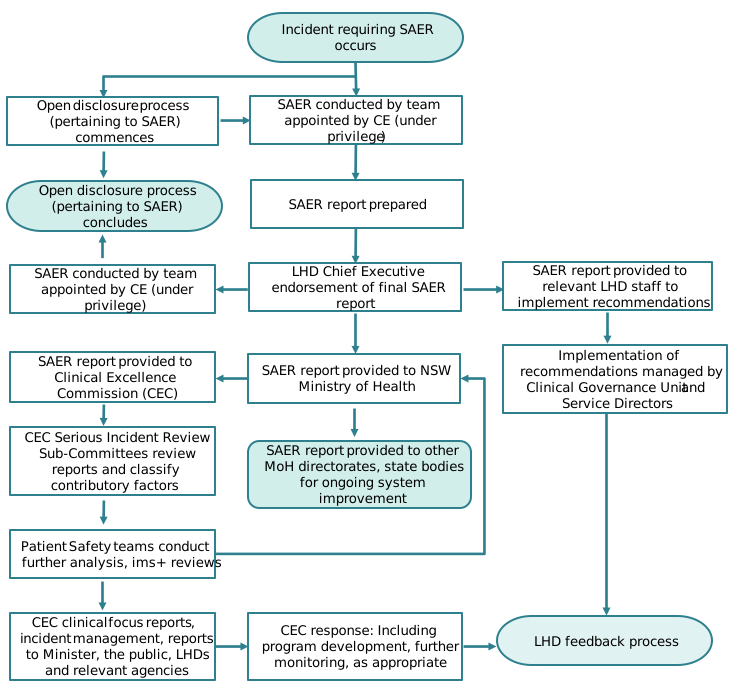
Clinical Harm Score 1 incidents require a Serious Adverse Event Review (SAER) to be undertaken. The purpose of a SAER is to understand what happened, why it happened and how incidents can be prevented in the future. These reviews identify factors that caused or contributed to the incident and provide recommendations to reduce identified risks. Local Health Districts (LHDs) and Specialty Health Networks (SHNs) monitor the implementation of these actions, and key lessons are shared across the health system.
The figure below provides the framework for the review process for incidents requiring a SAER during the January to June 2025 reporting period.
The NSW Ministry of Health (MoH) is notified of Harm Score 1 incidents, including Australian Sentinel Events (ASEs), and other significant clinical incidents through a Reportable Incident Brief (RIB).
Sentinel Events are rare, preventable events that result in serious harm or death to a patient. Ten nationally defined ASE types have been reported since July 2019.
Our role in incident reporting and patient safety
The Clinical Excellence Commission (CEC) leads patient, clinical and system safety across NSW Health. One of its key roles is to monitor and analyse clinical incident data reported to identify priority areas for improvement.
Through our programs and expertise, we support patient safety across NSW in areas such as:
- Recognition and management of the deteriorating patient
- Sepsis management
- Patient and family escalation
- Infection prevention and control
- Therapeutics safety
- Care of specific patient groups
NSW was the first Australian state to publicly report healthcare incident data, beginning in 2005. We published our first online clinical incident report in 2013. Continued public reporting reflects our commitment to be transparent, accountable and supportive of NSW Health clinicians and staff to provide safe, high quality care for every patient, every time.
About this report
This report presents patient-related incidents and consumer feedback reported between January to June 2025, drawing on data from ims+, Riskman, RIBs, SAERs and the Enterprise Data Warehouse (EDWARD).
The report builds on previous reports and will continue to evolve to support the identification of patient safety trends and improvement opportunities.
Due to changes in incident reporting systems and the introduction of Australian Sentinel Events, data in this report is not comparable with reports published prior to 2021.
This report contains:
- how to interpret the data
- patient-related incident and RIB data
- system and risk factors identified from SAER investigations
- sentinel events
- consumer feedback (including complaints and compliments).
Understanding the data
Analysis of NSW Health incident reporting data provides insight into how incidents occur, relevant clinical context, and identify system-related opportunities for improvement. Due to variation across services and facilities, it is difficult to make accurate comparisons based on notification numbers alone. Many factors influence incident reporting. Incident reporting counts or rates should not be used as the sole source of benchmarking data for any project, program, facility or health organisation.
Lower numbers or rates of reporting are not a reliable indicator of safer care. A qualitative rather than quantitative interpretation of the data is recommended. These data do not constitute an epidemiologic data set, and conclusions should not be drawn about the relative frequency of events or trends in events over time.
Incident data is regularly reviewed and updated by health services, and published data may change over time. The CEC ensures accuracy at the time of reporting, with updates reflected in subsequent reports. Data provided in published reports may change without notice.
More on understanding the data
Policy directives
These policies are relevant to incident management across NSW:
- NSW Health Incident Management (PD2020_047)
- Clinical Handover - Standard Key Principles (PD2026_021)
- Clinical Procedural Safety (PD2025_006)
- High-Risk Medicines Management (PD2024_006)
- Recognition and Management of Patients who are Clinically Deteriorating (PD2025_014)
- Pressure Injury Prevention and Management (PD2021_023)
- Prevention of Venous Thromboembolism (PD 2024_045)
- Identifying and Reporting of Maternal Deaths in NSW (PD2026_019)